
Pulmonary Function Testing (PFT)
Pulmonary function testing (PFT) is a group of breathing tests used to measure how well the lungs are working. These tests help evaluate airflow, lung capacity, and breathing performance—making them an important part of diagnosing and managing asthma and other respiratory conditions. At Allergy & Asthma Specialist of the Palm Beaches, we offer pulmonary function testing to help patients understand their symptoms, confirm diagnoses, and guide personalized treatment plans.
What Is Pulmonary Function Testing?
Pulmonary function testing includes a set of diagnostic tests that measure:
- How much air you can breathe in and out
- How quickly you can exhale
- How well air moves through your airways
PFTs provide valuable information about airway narrowing or obstruction, which is common in asthma and other breathing disorders.
Why Pulmonary Function Testing Is Performed
Pulmonary function testing may be recommended to:
- Diagnose asthma or confirm suspected asthma
- Evaluate shortness of breath, wheezing, or chronic cough
- Measure the severity of airway obstruction
- Monitor asthma control and treatment response
- Help differentiate asthma from other respiratory conditions
PFT results help ensure treatment is accurate and targeted.
Conditions Evaluated With Pulmonary Function Testing
Pulmonary function testing is often used to evaluate:
- Asthma
- Chronic cough
- Wheezing
- Exercise-related breathing symptoms
- Shortness of breath
- Respiratory symptoms triggered by allergies or irritants
Because symptoms can overlap between conditions, testing provides objective data to support diagnosis.
What to Expect During Pulmonary Function Testing
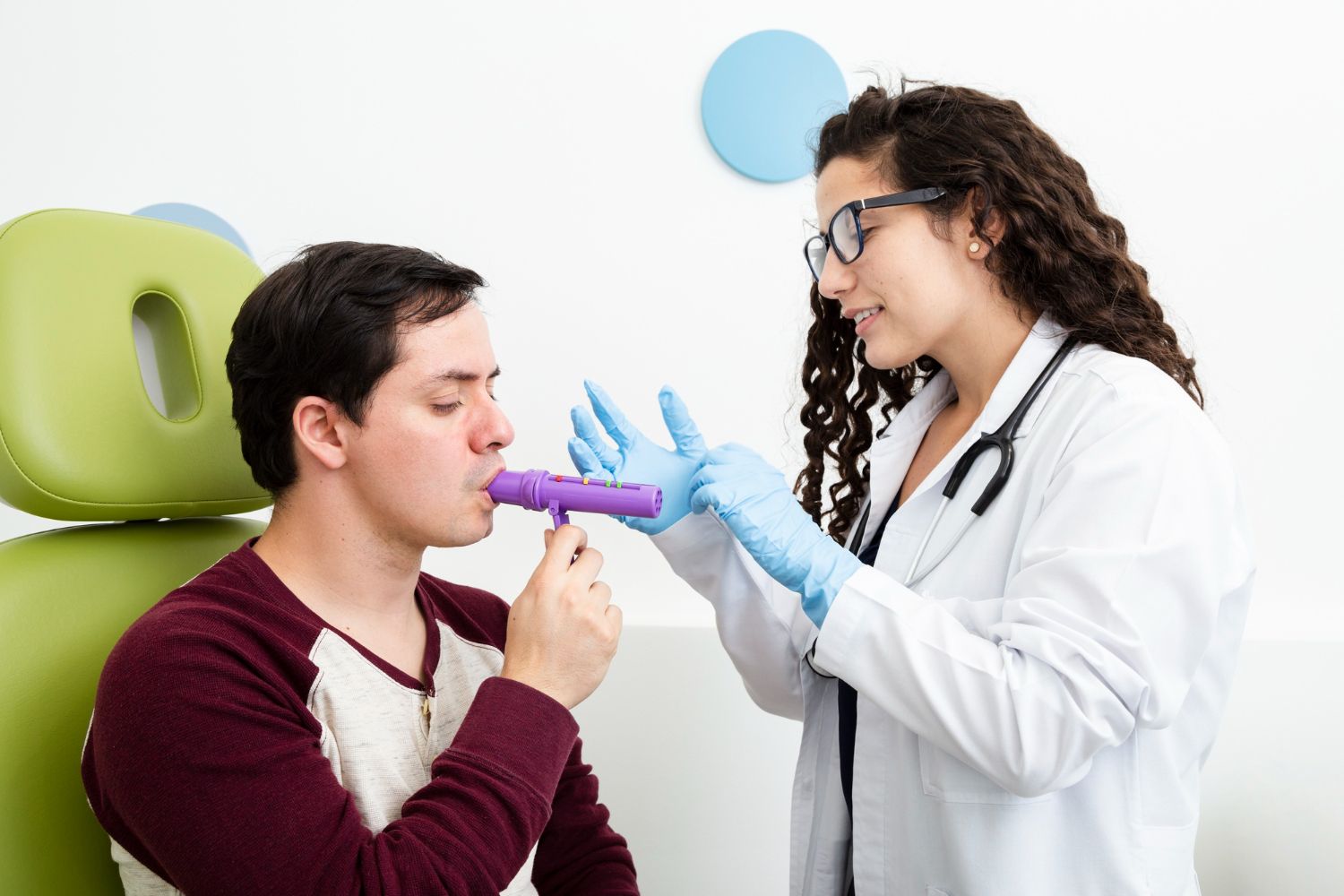
Pulmonary function testing is typically performed in-office with guidance from trained clinical staff.
During testing, you can expect:
- Clear instructions on breathing technique
- Breathing into a mouthpiece connected to testing equipment
- Multiple breathing maneuvers to measure airflow and lung capacity
- Repeat measurements to ensure accuracy
- Review of results and next steps with your provider
Testing is non-invasive and does not involve needles.
Pulmonary Function Testing
How Long Does Pulmonary Function Testing Take?
Most
pulmonary function testing appointments take about 30–60 minutes, depending on the tests performed and whether additional evaluation is needed.
Understanding Your Pulmonary Function Test Results
Your provider will interpret your PFT results alongside your symptoms and medical history. Results can help identify:
- Whether airflow obstruction is present
- The severity of breathing limitation
- How well the lungs respond to treatment
- Whether symptoms may be related to asthma or another respiratory issue
These results help guide treatment planning and long-term monitoring.
Benefits of Pulmonary Function Testing
Pulmonary function testing offers several important benefits:
- Objective measurement of lung function
- Improved accuracy in asthma diagnosis
- Better treatment decision-making
- Monitoring of asthma control over time
- Reduced trial-and-error in medication planning
Testing helps patients and providers better understand what is happening in the airways.
Is Pulmonary Function Testing Safe?
Yes. Pulmonary function testing is safe and non-invasive. Some patients may feel briefly lightheaded after repeated breathing maneuvers, but this typically resolves quickly. Our team provides close guidance throughout testing for comfort and safety.
Schedule Pulmonary Function Testing in Palm Beach, FL
If you’re experiencing breathing symptoms or need asthma evaluation, pulmonary function testing can provide clear answers. At
Allergy & Asthma Specialist of the Palm Beaches, we offer PFT testing to support accurate diagnosis and personalized treatment planning.
Pulmonary Function Testing FAQs
Is pulmonary function testing the same as spirometry?
Spirometry is one type of pulmonary function test. Pulmonary function testing may include spirometry and other breathing measurements depending on your needs.
Do I need PFT testing to diagnose asthma?
PFT testing is commonly used to diagnose or confirm asthma and evaluate severity. It provides objective data that supports accurate treatment planning.
Can PFT testing help monitor asthma control?
Yes. PFT testing helps monitor lung function over time and can guide treatment adjustments to improve asthma control and reduce flare-ups.