
Patch Testing for Contact Allergies
If you experience recurring rashes, skin irritation, itching, or flare-ups that don’t seem to have a clear cause, patch testing can help identify the trigger. Unlike skin prick testing (used for environmental and food allergies), patch testing is designed to detect delayed allergic reactions caused by contact with specific substances. At Allergy & Asthma Specialist of the Palm Beaches, we offer patch testing to help identify contact allergens and create a plan to prevent future skin reactions.
What Is Patch Testing?
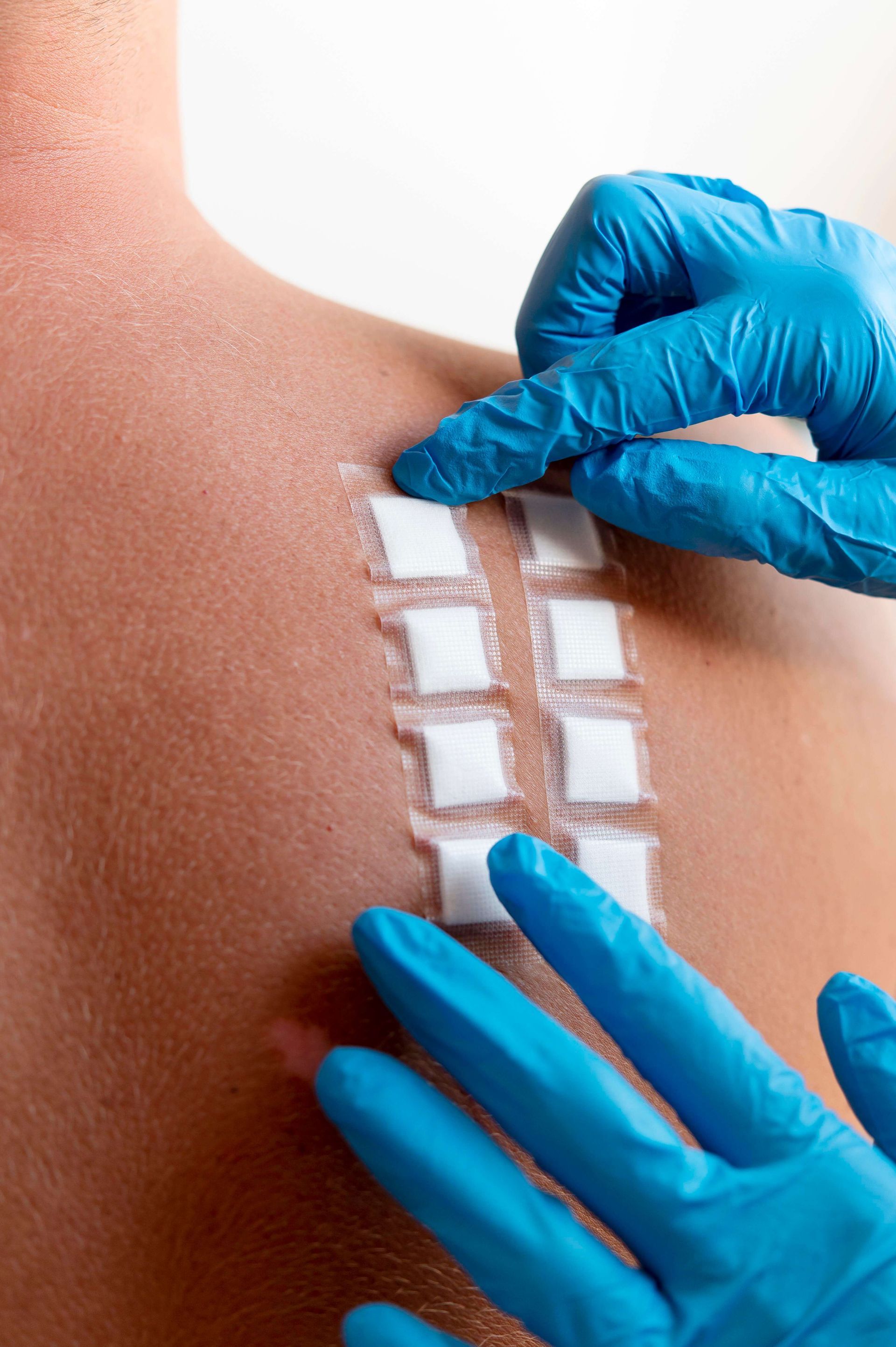
Patch testing is a specialized allergy procedure used to diagnose allergic contact dermatitis—a delayed immune reaction that occurs when the skin touches certain substances.
During patch testing:
- Small amounts of allergens are placed on the skin using patches
- Patches stay in place for a period of time
- The skin is evaluated for delayed reactions over multiple visits
Patch testing helps identify substances that may be causing skin flare-ups so they can be avoided.
What Conditions Can Patch Testing Help Diagnose?
Patch testing is commonly used to evaluate:
- Allergic contact dermatitis
- Chronic or recurring rashes
- Eczema-like flare-ups that don’t improve
- Skin reactions to products or workplace exposure
- Unexplained itching or irritation in specific areas
If your rash returns in the same location repeatedly, patch testing may be especially helpful.
Common Substances Tested in Patch Testing
Patch testing may help identify allergy to common contact allergens such as:
- Nickel (jewelry, watches, belt buckles)
- Fragrances (perfumes, skincare products)
- Preservatives (in lotions, shampoos, cosmetics)
- Rubber or latex-related compounds
- Adhesives
- Hair dyes and cosmetic ingredients
- Cleaning agents or workplace chemicals (when applicable)
Testing is selected based on your symptoms and suspected exposures.
Who Should Consider Patch Testing?
You may benefit from patch testing if:
- You have a rash that keeps coming back
- You have chronic itching, irritation, or dermatitis
- Symptoms worsen after using certain products
- You suspect allergy to cosmetics, soaps, or detergents
- You have reactions to metals (jewelry, buttons, watches)
- You experience work-related skin flare-ups
- Over-the-counter treatments aren’t resolving symptoms
Patch testing can help reduce the guesswork and provide clearer answers.
What to Expect During Patch Testing
Patch testing is completed over multiple days to allow time for delayed reactions to appear.
Typically, the process includes:
- A consultation and review of skin symptoms and exposure history
- Placement of patches on the back (or another area)
- Instructions to keep the patches dry and in place
- Follow-up visits for readings and result interpretation
Your provider will give detailed instructions to help ensure accurate results.
Patch Testing
How Long Does Patch Testing Take?
Patch testing requires multiple visits over several days. This is necessary because allergic contact dermatitis reactions are delayed and may take time to develop.
Benefits of Patch Testing
Patch testing offers several important benefits:
- Identifies specific contact allergens
- Helps prevent recurring flare-ups
- Improves long-term skin comfort and confidence
- Supports personalized avoidance plans
- Reduces reliance on repeated trial-and-error treatments
Once triggers are identified, many patients see significant improvement with avoidance strategies.
What Happens After Patch Testing?
After patch testing, your provider will review results and explain which substances caused reactions. You will receive:
- A clear explanation of triggers
- Product and exposure avoidance guidance
- Recommendations for safer alternatives
- A personalized plan to reduce flare-ups
This is one of the most valuable parts of patch testing—knowing exactly what to avoid.
Is Patch Testing Safe?
Patch testing is considered safe and is performed under medical supervision. Some patients experience temporary itching or redness at patch sites. These reactions help identify allergens and typically resolve after testing is completed.
Schedule Patch Testing in Palm Beach, FL
If you’re dealing with persistent or recurring skin reactions,
patch testing may provide the answers you’ve been looking for. At
Allergy & Asthma Specialist of the Palm Beaches, we offer patch testing to identify contact allergens and develop a personalized plan for long-term skin relief.
Patch Testing FAQs
Is patch testing the same as skin prick testing?
No. Patch testing is used to diagnose delayed contact allergies (like allergic contact dermatitis). Skin prick testing is used to evaluate immediate allergic reactions such as environmental or food allergies.
Can patch testing identify reactions to skincare products?
Yes. Patch testing can help identify sensitivity to ingredients commonly found in skincare, cosmetics, soaps, shampoos, and detergents.
Will patch testing cure my dermatitis?
Patch testing does not cure dermatitis, but it helps identify triggers. Avoiding allergens is often the most effective long-term way to reduce flare-ups and improve symptoms.