Eczema and Atopic Dermatitis: When Your Skin Problem Is Actually an Allergy Problem
Key Points
- Eczema (atopic dermatitis) is a chronic inflammatory skin condition closely linked to allergic disease, affecting both children and adults
- Food allergens, environmental allergens like dust mites and pet dander, and South Florida's humidity can all trigger or worsen eczema flares
- Seeing a board-certified allergist can help identify the specific triggers driving your eczema and open the door to targeted treatment
- Newer biologic medications like Dupixent have transformed treatment for moderate to severe atopic dermatitis that does not respond to topical therapies
- Dr. Jeffrey Jacobs offers eczema evaluation and allergy-focused treatment at Allergy & Asthma Specialists of the Palm Beaches in Jupiter, FL
Medically reviewed by: Dr. Jeffrey Jacobs, MD | Board-Certified Allergist & Immunologist | August 2026
Eczema is commonly thought of as a skin condition, and it is, but stopping there misses a significant part of the picture. Atopic dermatitis, the most common form of eczema, is part of what allergists call the atopic triad: a group of three closely related conditions that tend to travel together. The other two are allergic rhinitis and asthma. People with one of these conditions are significantly more likely to have or develop the others, and the underlying immune dysfunction driving all three is the same type 2 inflammatory process.
That connection matters because it means an allergist is often in the best position to evaluate what is driving eczema, particularly when flares seem to be triggered by environmental or food exposures and topical treatments are not providing adequate control.
What Is Atopic Dermatitis?
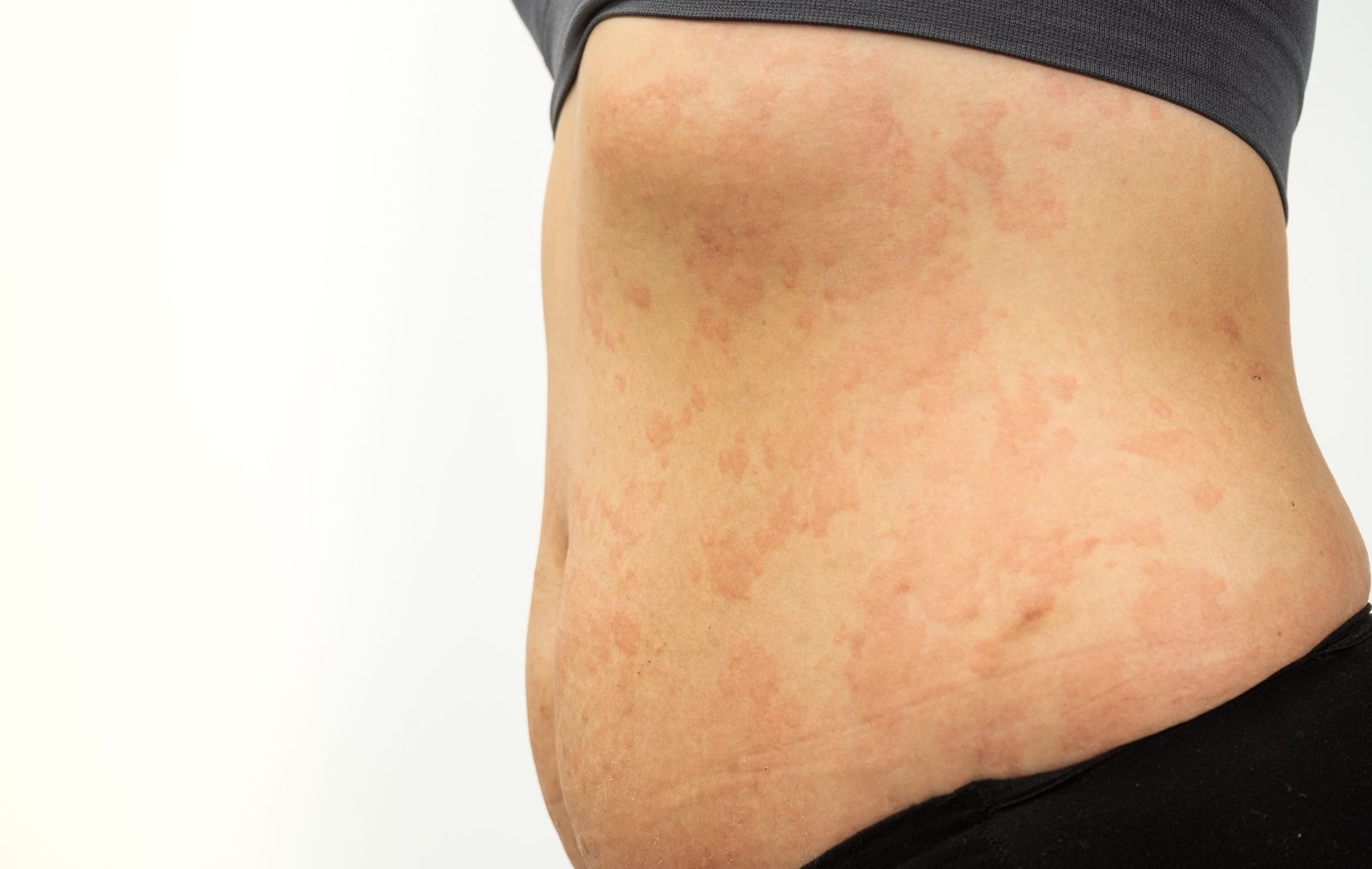
Atopic dermatitis is a chronic condition that causes the skin to become dry, itchy, inflamed, and prone to flares. It affects the skin's barrier function, meaning the outer layer of skin does not retain moisture or block irritants and allergens as effectively as it should. This allows environmental triggers to penetrate more easily and provoke an immune response in the skin itself.
Symptoms vary by age. In infants and young children, eczema most commonly appears on the face, scalp, and the outer surfaces of the arms and legs. In older children and adults, it tends to concentrate in the skin folds, particularly the inner elbows, behind the knees, the neck, and the wrists. The hallmark symptom at every age is intense itching, which often worsens at night and can significantly disrupt sleep.
Eczema follows a relapsing and remitting course for most patients, meaning periods of relatively clear skin alternate with flares of active inflammation. Identifying what triggers the flares is one of the most important steps in managing the condition effectively.
The Connection Between Eczema and Allergies
The immune pathway driving atopic dermatitis is the same type 2 inflammatory cascade involved in allergic asthma and allergic rhinitis. In patients with atopic dermatitis, the skin's immune environment is dominated by IL-4 and IL-13 signaling, the same cytokines targeted by biologic medications like Dupixent. This shared mechanism explains why eczema, asthma, and nasal allergies so often coexist and why treating the underlying immune dysfunction can improve all of them simultaneously.
Allergic triggers play a direct role in eczema flares for many patients. The two most clinically significant categories are food allergens and environmental allergens.
Food allergies, particularly to milk, egg, peanut, wheat, and soy, are a recognized trigger for eczema flares in a significant proportion of children with moderate to severe atopic dermatitis. The connection is not universal, and not every child with eczema has a food allergy driving it, but in children whose eczema is severe, persistent, or not responding to standard topical treatment, food allergy evaluation is an important diagnostic step. Adults can also develop food-triggered eczema, though the association is less common than in children.
Environmental allergens, particularly dust mites, are a well-established eczema trigger. Because dust mites are a year-round indoor allergen in South Florida's humidity, patients sensitized to dust mites may experience chronic low-grade flares with periodic worsening rather than the clearly episodic pattern seen with food triggers. Pet dander, mold, and pollen can also contribute to eczema flares in sensitized individuals.
Contact allergens are a separate category. Contact dermatitis occurs when the skin reacts to direct contact with a substance, common culprits being fragrances, preservatives, nickel, and certain topical medications including some antibiotic ointments. Patch testing can identify contact allergens that may be contributing to skin flares in patients who are not responding as expected to standard eczema treatment.
Why South Florida's Climate Complicates Eczema
Humidity is a double-edged issue for eczema patients in South Florida. On one hand, very dry air worsens eczema by further disrupting the skin barrier. On the other hand, excessive humidity promotes sweat, which is itself an eczema trigger for many patients, and supports the growth of dust mites and mold, both of which can worsen allergic skin inflammation.
The heat in South Florida also drives sweating, and sweat is a recognized eczema trigger that causes itching and skin irritation in sensitive individuals. For patients whose eczema reliably flares during warmer months or after physical activity, sweat-triggered inflammation may be a significant component of their disease.
The combination of heat, humidity, high allergen burden, and sun exposure creates a challenging skin environment for atopic dermatitis patients. Many patients find their eczema more difficult to control during Florida summers than it was in other climates.
When Should You See an Allergist for Eczema?
Mild eczema that responds well to moisturizers and occasional topical corticosteroids is typically managed by a primary care physician or dermatologist. But there are clear situations where an allergist evaluation adds significant value.
If your eczema is moderate to severe and not responding adequately to topical treatments, if you suspect specific foods or environmental exposures are triggering your flares, if you or your child also has asthma or nasal allergies, if you are a candidate for biologic therapy, or if contact allergens may be contributing to your skin reactions, an allergist is well positioned to provide a more targeted evaluation.
Food and environmental allergy skin testing and specific blood testing can identify which allergens your immune system is responding to. Patch testing can identify contact allergens that may be contributing to skin inflammation. Together, these tools give a much clearer picture of what is driving your eczema than symptom observation alone.
Treatment Options for Atopic Dermatitis
Treatment for eczema is individualized based on severity, triggers, and which parts of the immune pathway are most active. The foundation of management for all patients includes consistent moisturization with fragrance-free emollients, identifying and avoiding known triggers, and gentle skin care practices that minimize further barrier disruption.
Topical corticosteroids remain a mainstay of treatment for acute flares. Topical calcineurin inhibitors are an alternative for sensitive areas like the face and skin folds where long-term steroid use is not ideal. These topical treatments are effective for many patients with mild to moderate disease.
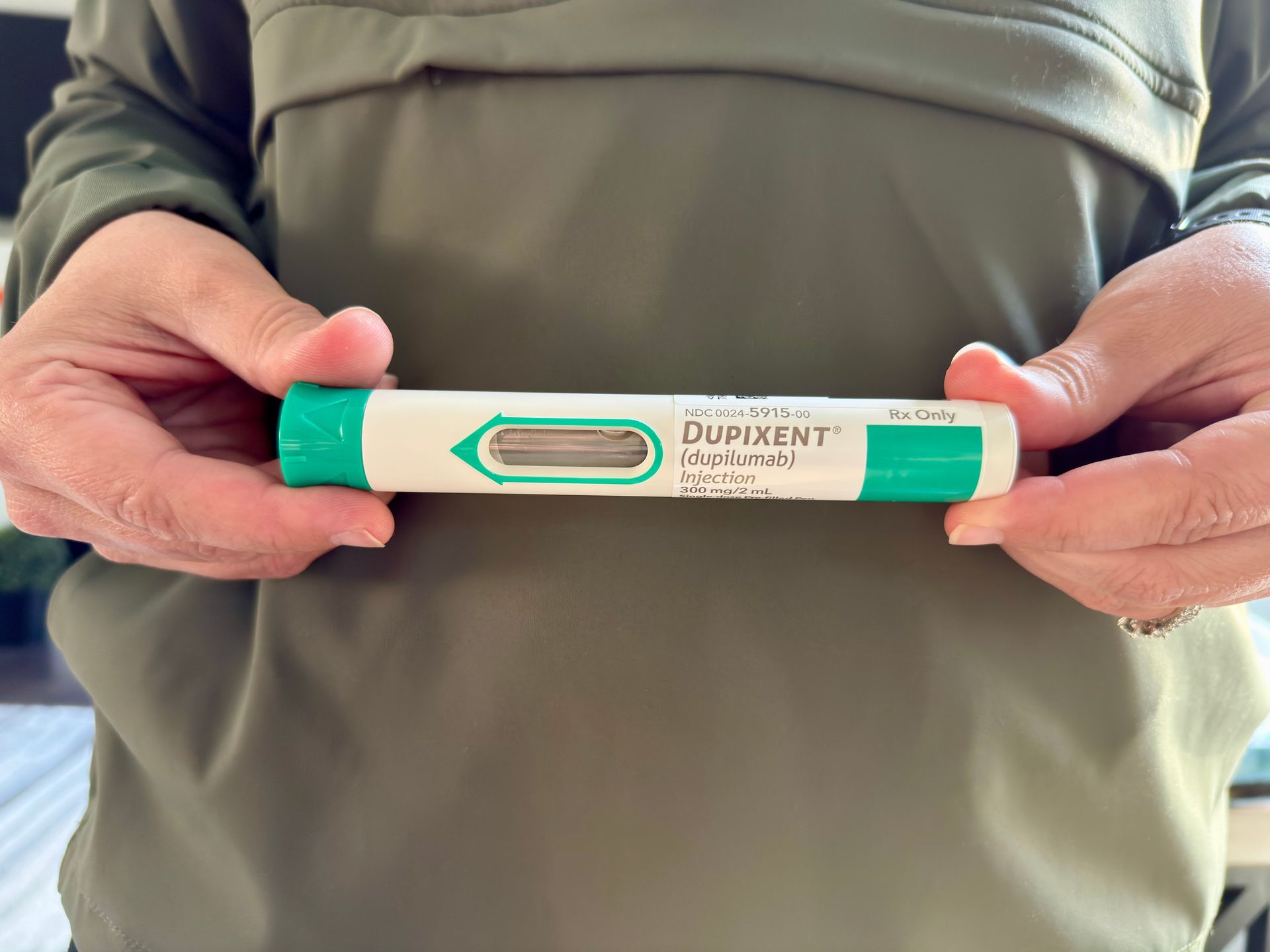
For patients with moderate to severe atopic dermatitis that is not adequately controlled with topical therapies, biologic medication management has transformed what is possible. Dupixent (dupilumab) is the most widely used biologic for atopic dermatitis and works by blocking the IL-4 and IL-13 signaling pathway that drives the skin inflammation. Many patients on Dupixent experience dramatic improvement in skin appearance and itch intensity within weeks to months, with significant reduction in flare frequency over time. It is administered by injection every two to four weeks and is suitable for adults and children as young as six months in appropriate cases.
For patients whose eczema has an identifiable allergic trigger component, allergen immunotherapy targeting dust mites may also be beneficial. Research supports the role of dust mite immunotherapy in reducing eczema severity in sensitized patients, and it represents an option for patients who want to address the underlying allergic driver rather than managing symptoms alone.
Frequently Asked Questions
Is eczema caused by allergies? Eczema is not caused by allergies in a simple one-to-one sense, but allergic triggers play a significant role in driving flares for many patients. The underlying immune dysfunction in atopic dermatitis involves the same type 2 inflammatory pathway active in allergic asthma and hay fever, and specific food or environmental allergens can directly provoke skin inflammation in sensitized individuals. Identifying and addressing allergic triggers is an important part of comprehensive eczema management for patients where those triggers are present.
At what age does eczema typically start? Atopic dermatitis most commonly begins in infancy or early childhood, often appearing in the first year of life. Many children experience improvement or resolution as they get older, though a significant proportion carry the condition into adulthood. Adult-onset eczema also occurs, sometimes appearing for the first time in people who had no childhood history of skin disease. The condition can develop or worsen at any age.
Can food allergy testing help with eczema? For children with moderate to severe eczema that is not responding well to standard treatment, food allergy testing is a worthwhile diagnostic step. Milk, egg, peanut, wheat, and soy are the most commonly implicated food triggers in childhood atopic dermatitis. Identifying and managing a food allergy does not cure eczema but can reduce the frequency and severity of flares in patients where food is a contributing trigger. Food allergy is a less common driver of eczema in adults but is still worth evaluating in the right clinical context.
What is the difference between eczema and contact dermatitis? Atopic dermatitis is a systemic immune condition driven by internal allergic sensitization and skin barrier dysfunction. Contact dermatitis is caused by direct skin contact with an external irritant or allergen and is more localized to areas of exposure. The two can coexist and sometimes look similar. Patch testing is the diagnostic tool used to identify contact allergens, while skin prick testing and blood testing identify systemic IgE-mediated sensitivities. An allergist can evaluate for both.
Is Dupixent safe for children with eczema? Dupixent is FDA-approved for atopic dermatitis in children as young as six months old, making it an option for pediatric patients with severe disease that has not responded to topical treatments. Its safety profile in children is well established from clinical trials. Dr. Jacobs can evaluate whether Dupixent is appropriate for a child based on age, disease severity, and treatment history.
Will eczema go away on its own? Many children with atopic dermatitis do experience significant improvement or complete resolution as they get older, particularly through adolescence. However, a substantial number of patients continue to have eczema into adulthood, and some adults develop it for the first time later in life. The condition is chronic and relapsing for most patients, which is why identifying triggers and establishing an effective management plan matters more than waiting it out.
If eczema flares are disrupting your life or your child's and topical treatments are not giving you the control you need, an allergy evaluation may reveal what is driving it. Call our Jupiter office at (561) 510-7232 or book online here to schedule an appointment with Dr. Jacobs.
Disclaimer: The information provided on this blog is for general informational purposes only and is not intended as, and should not be considered, medical advice. All information, content, and material available on this blog are for general informational purposes only. Readers are advised to consult with a qualified healthcare professional for medical advice, diagnosis, or treatment. The author and the blog disclaim any liability for the decisions you make based on the information provided. Always seek the advice of your physician or other qualified health provider with any questions you may have regarding a medical condition.